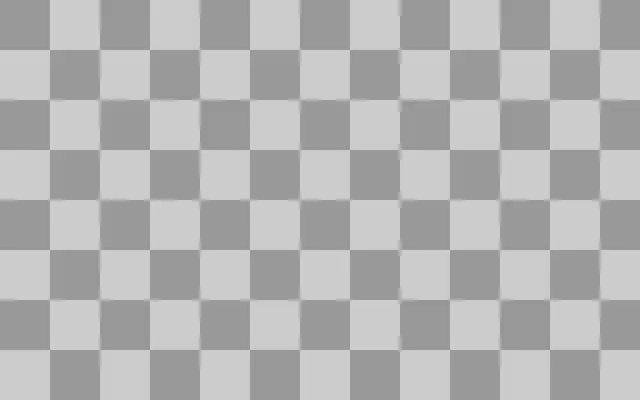
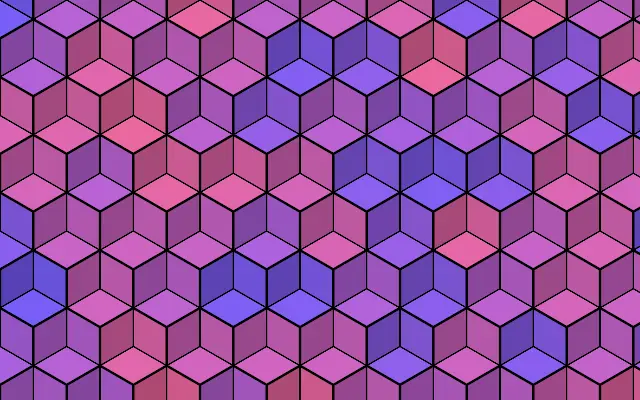
It looks like a chessboard or an old tiled floor, with two square colors taking turns. The regular cells create a clear rhythm without extra detail.
Increase `cells` to fit more, smaller squares along the canvas height; choose the alternating colors with `colorA` and `colorB`. `softness` softens the color boundary. `colorSpace` selects how colors are interpolated when that boundary is soft.
This pattern fills the canvas by itself, so it needs no input layer. Strongly contrasting squares can compete with text; use it as a background or keep the two colors closer together.
When to use
Use it for board-game-inspired backgrounds, tiled graphics, or a loading screen that needs a repeating motif. Avoid placing high-contrast squares behind small text, where they can feel visually busy.