originOrigin Set in code center — Reference edge the center position is measured from (center default). Lets you pin the shape relative to a corner or the canvas centre. centerCenter x 0.5 y 0.5
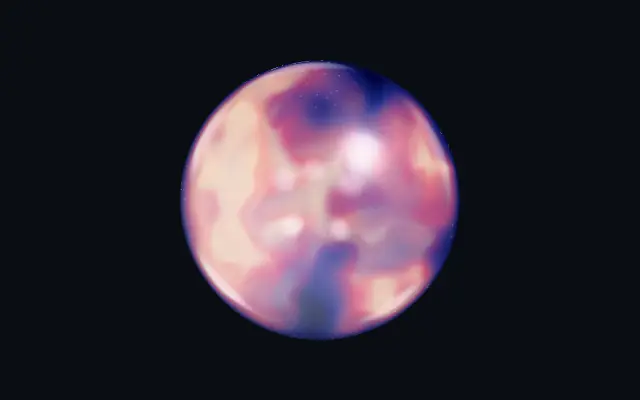
{"x":0.5,"y":0.5} x, y: 0 – 1 Center position of the nebula shape scaleScale 1 1 0.1 – 3 (step 0.01) Scale of the nebula shape (1 = default size) rotationRotation 0 0 0 – 360 (step 1) Rotation of the nebula shape in degrees coreColorCore Color #ffd9b0 #ffd9b0 — The hot color the densest gas cores glow with — the embedded newborn stars gasColorGas Color #ff5e7a #ff5e7a — The main emission color of the gas body — H-alpha rose by default veilColorVeil Color #3a5bdb #3a5bdb — The color of the thin outer veils and the deep-space background behind the gas colorSpaceColor Space Linear RGB OKLCh OKLAB HSL HSV LCH oklab linear · oklch · oklab · hsl · hsv · lch Color space the veil → gas → core ramps blend in densityDensity 1 1 0 – 1 (step 0.01) Optical density of the gas — how strongly clouds occlude the stars and gas behind them cavityCavity 0 0 0 – 1 (step 0.01) How hollowed-out the nebula is — 0 fills the volume with cloud banks, high carves large dark voids between them dustDust 0.55 0.55 0 – 1 (step 0.01) Cold dark dust lanes threading the gas — absorb-only tendrils that redden the clouds and stars behind them gasScaleGas Scale 0.4 0.4 0.1 – 1 (step 0.01) Feature size of the gas — higher = finer, busier cloud detail billowBillow 0.6 0.6 0 – 1 (step 0.01) Turbulent folding of the clouds — 0 = smooth drifting banks, 1 = heavily churned billows glowGlow 0 0 0 – 2 (step 0.01) Hot emission bloom of the dense cores seedSeed 0 0 0 – 100 (step 1) Random seed — pans the gas field to a different region of noise space for a new cloud composition starsStars 0.07 0.07 0 – 1 (step 0.01) Brightness of the star fields drifting at depth behind and inside the gas starScaleStar Scale 1 1 0.25 – 3 (step 0.01) Density of the star fields — higher = smaller, busier stars twinkleTwinkle 0.35 0.35 0 – 1 (step 0.01) Intensity of the star twinkle (0 = steady stars, 1 = full shimmer) refractionRefraction 0.5 0.5 0 – 1 (step 0.01) How strongly the curved glass walls bend the interior seen near the edges environmentEnvironment 0.7 0.7 0 – 2 (step 0.01) Strength of the studio softboxes reflected in the polished glass surface highlightHighlight 1.15 1.15 0 – 2 (step 0.01) Sharp key-light glint on the glass highlightSoftnessHighlight Softness 0.5 0.5 0 – 1 (step 0.01) Specular highlight softness — lower is a tighter, sharper glint lightAngleLight Angle 315 315 0 – 360 (step 1) Direction of the key light and reflected studio, in degrees edgeSoftnessEdge Softness 0.05 0.05 0 – 1 (step 0.01) Softness of the shape boundary edge speedSpeed 0.3 0.3 0 – 4 (step 0.01) Speed of the slowly churning gas and twinkling stars. 0 freezes the nebula. shapeShape Set in code {"type":"sphere3D","radius":0.35} — Serialized shape configuration (JSON) shapeSdfUrlshapeSdfUrl Set in code — URL to a pre-generated SDF .bin file shapeTypeshapeType Set in code — Active SDF shape type